This is the first formal product launch StrawBerry Innovation has held since the company was founded.
Friends who know us know that we are a slightly unusual company. Over the years, we have barely traveled, rarely reached out to customers first, posted only a few articles on our public account, had no dedicated sales team, and never raised outside funding.
On the internet, we were almost an invisible team.
Yet this company has stood its ground in intense competition with solid product delivery, while also achieving healthy profit and growth.
Some peers once felt that the maturity of StrawBerry's products did not match the apparent size of the company, and asked around curiously:
Does the boss have a mine at home?
How do they survive without fundraising or marketing?
Of course there was no mine. When we first came to Shenzhen, we did not even have a place to stay. We were just a few backpack-carrying geeks with a lot of enthusiasm.
We made it here by relying on one thing:
This is the set of numbers we are proudest of:
This quiet trust is more powerful than any polished slogan. These customers rarely speak for us online, but through repeat purchases and delivered projects, they quietly cast their vote for StrawBerry.
It tells us:
If you truly refine the product,
the market will speak for you,
and customers will recommend you.
Today, we want to properly tell the story behind that trust, along with our newest answer.
What exactly are we building?
Think about the science fiction films and novels you have seen. No matter what kind of future world they imagine, there is always a scene in the sky: drones and aircraft moving through cities, valleys, deserts, and coastlines, becoming the city's bloodstream and nervous system, flowing in an orderly, efficient, and intelligent way.
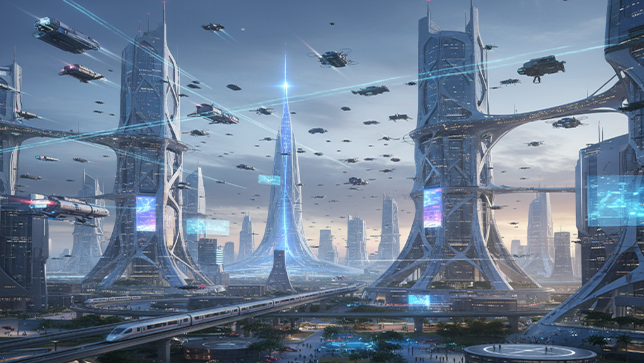
To make that real, there is one prerequisite: these aircraft can no longer depend on people for every operation.
- Automatic takeoff
- Automatic landing
- Automatic energy replenishment
- Automatic data transmission
In other words, the future low-altitude world must have a layer of infrastructure, just like today's charging piles, communication base stations, and data centers, except this time it is built for aircraft.
That is what we have been doing these past few years:
Before the wave of the low-altitude economy truly arrives,
quietly refine this layer of infrastructure.
Where does our confidence come from?
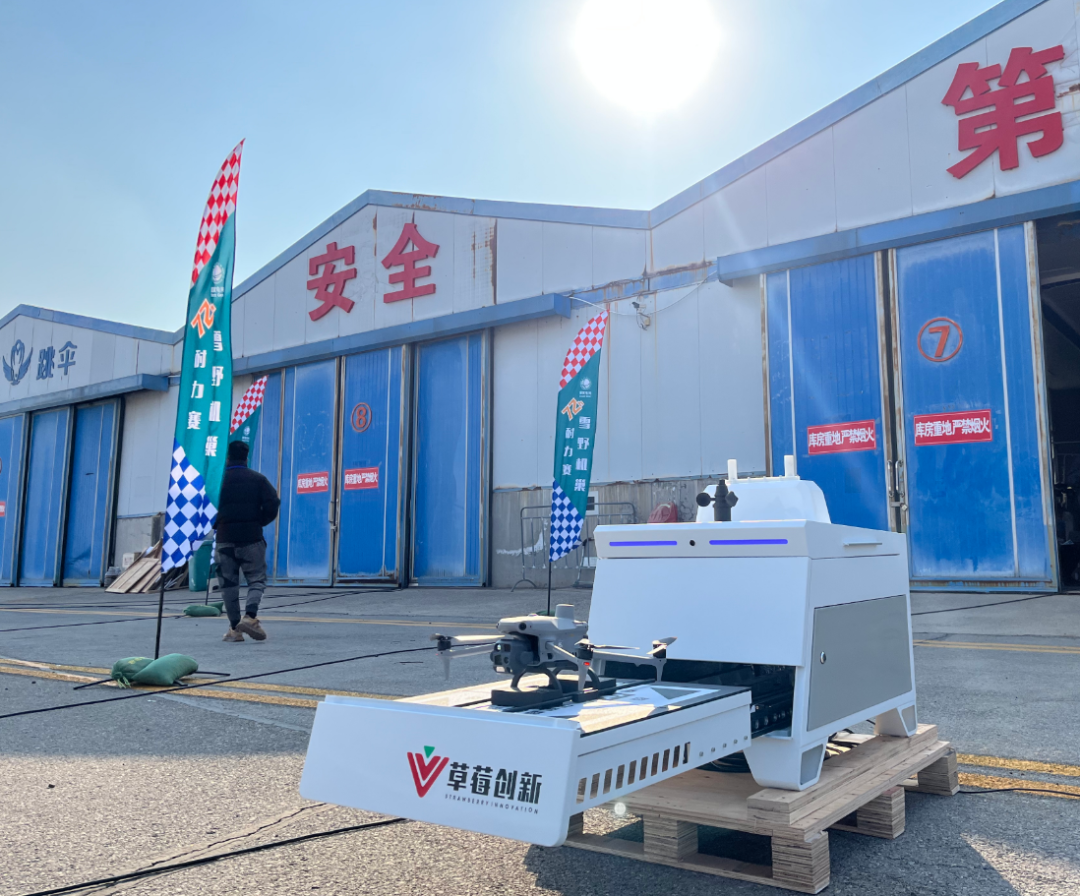
Our earlier charging dock won second place, behind only DJI, in the 72-hour dock endurance competition organized by State Grid Intelligent. Many competitors behind us had raised hundreds of millions and already had major customers.
In evaluations by PipeChina, China Telecom, and many other industry comparisons, we have also ranked near the top.
After trying many docks on the market, many customers eventually replaced them with StrawBerry docks. Their reasons usually came down to two points:
- Stable and easy to use.
- When projects raised difficult requirements others could not solve, StrawBerry was often the only team able and willing to solve them.
Why can a team that is not large stand firm among so many strong players?
One reason is that we are an extremely stable full-stack self-developed team.
Over the years, we have met problems and solved them, step by step, truly connecting software and hardware end to end:
- UPS: Instead of bulky market devices with high conversion loss, we built a solution without inverter AC output, with millisecond switching, controllable capacity, and smart shutdown to prevent drone and controller batteries from over-discharging.
- Wind and rain sensors: A self-developed structure gives more freedom in appearance, optional optical or piezo rain measurement, and continuously iterated algorithms.
- RTK module: Integrated from chips with dual antennas, stronger signal stability, and vehicle heading support.
- Closed-loop motors: Developed with suppliers to integrate drive, encoder, and power-loss memory for dock applications.
- Charging management system: Replaces the original charger with fuller information, faster response, and support for both charging and battery-swap modes.
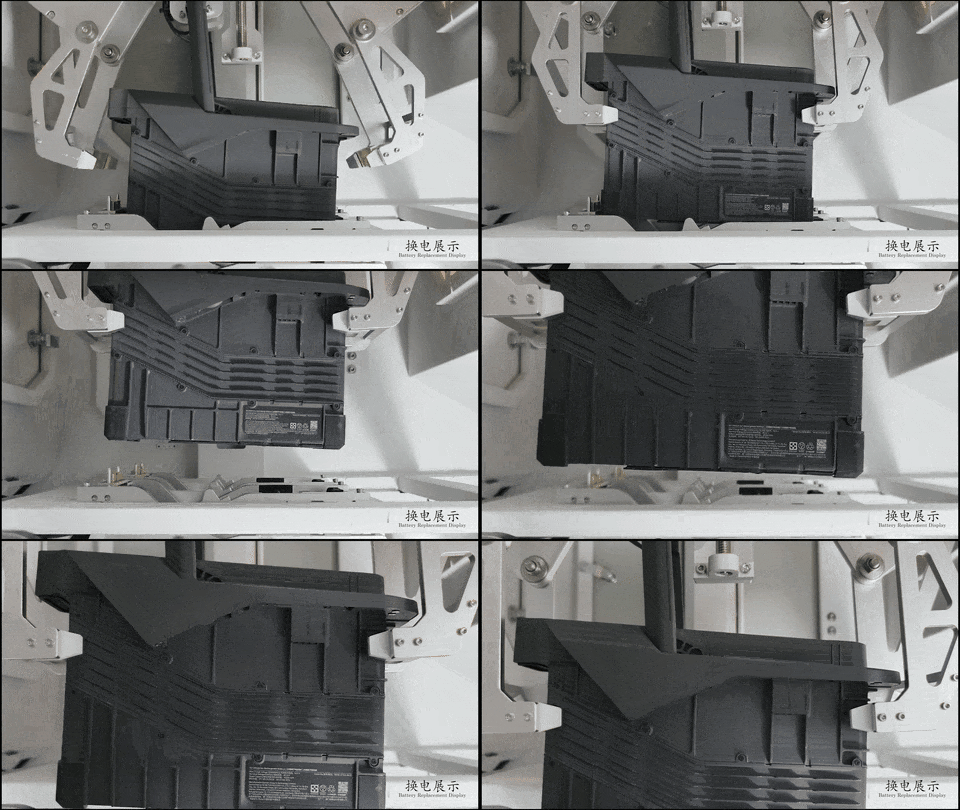
- Battery-swap mechanism: Replaces off-the-shelf robotic arms with a simple, high-torque, calibration-free structure that remains tuning-free for deployment, relocation, and vehicle use.
- Soft-router system: Replaces industrial routers with richer interfaces and better 4G/5G support.
- Compact cooling air conditioner: Uses TEC semiconductor cooling in a self-developed compact system that meets thermal needs without taking valuable space.
This is not for showing off. It is because only full-stack self-development lets us face extreme scenarios and difficult requirements without passing the blame, and truly solve the problem.
These experiences are why we dare to step into the spotlight today and formally introduce our new-generation product.
How did we develop step by step?
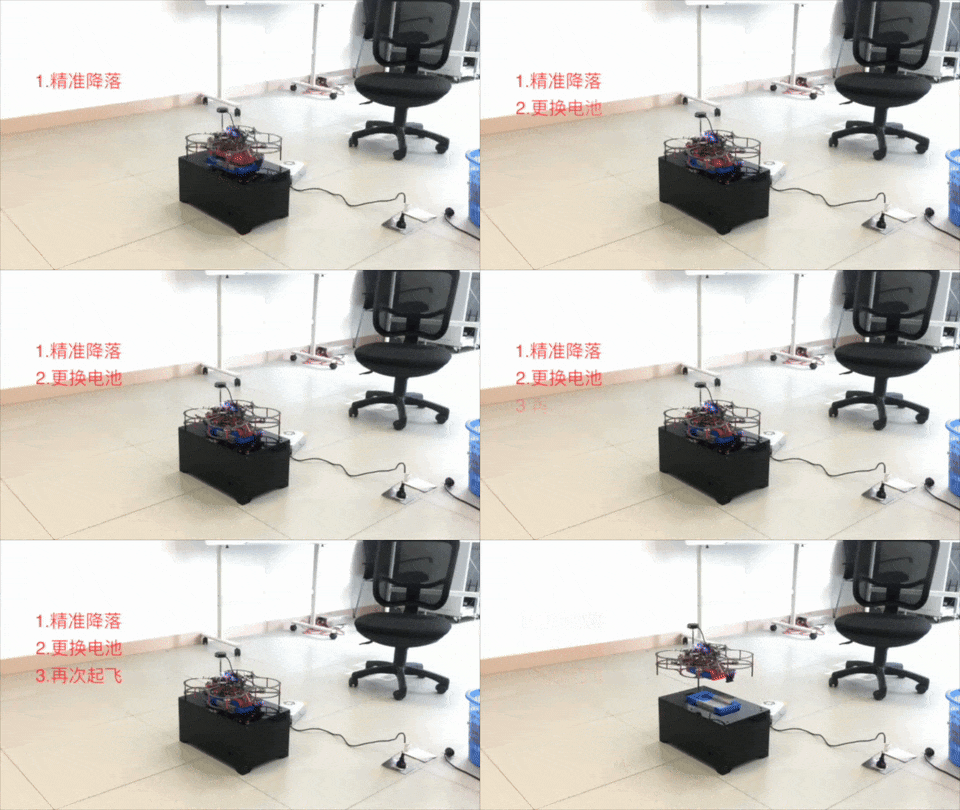
This photo shows what the company looked like when it had just started. We assembled an open-source aircraft, used 3D printing to build a battery-swap structure, and controlled it with an Arduino teaching board. The swap mechanism looked like a revolver: rotate one chamber, swap one battery.
Nothing was mature then, but one idea was very clear:
If drones still need people to swap batteries and place them by hand,
they will never become real infrastructure.
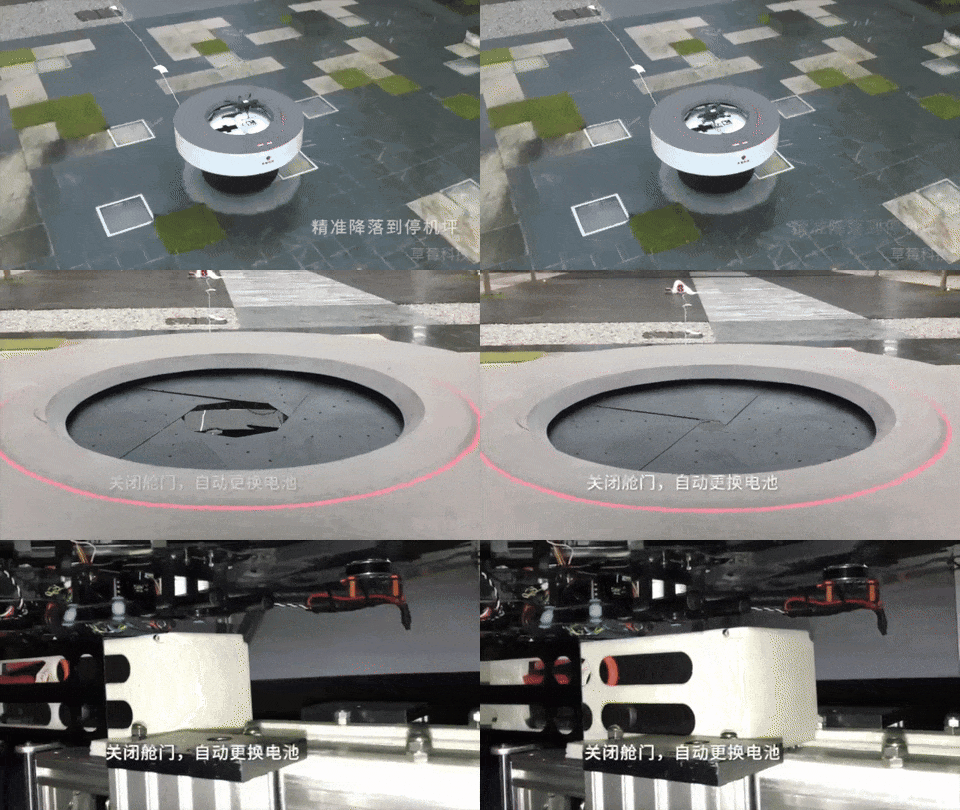
Later, we built a larger battery-swap dock. Its door mechanism was very dramatic, like an opening and closing aperture. It looked cool, but it was still far from engineering maturity.
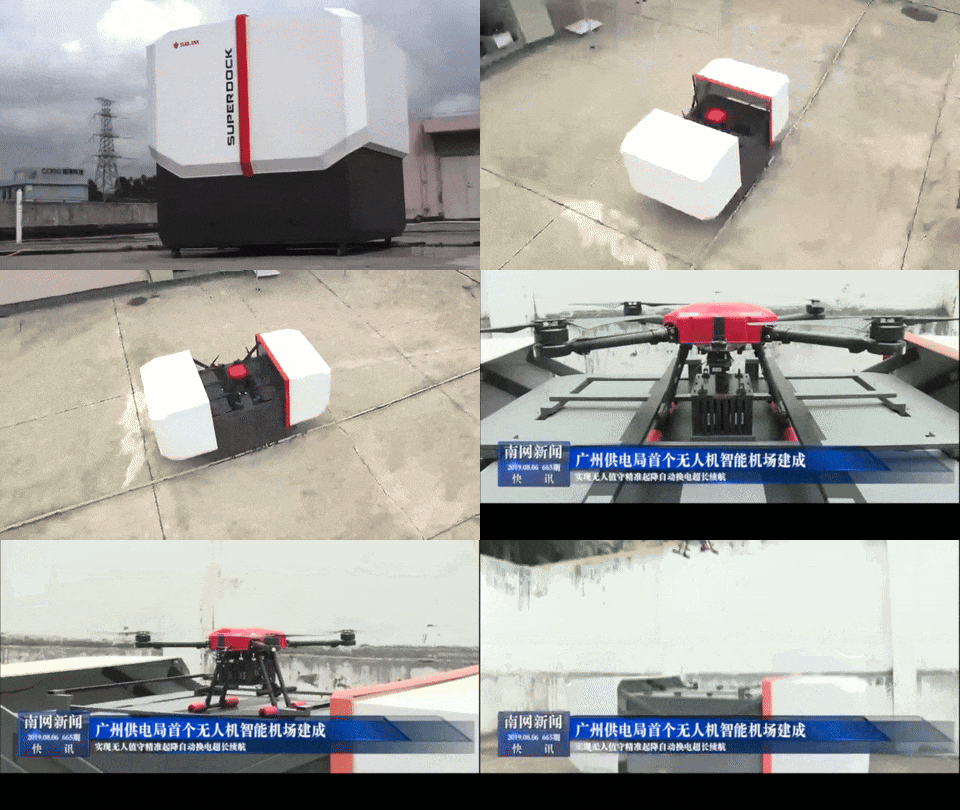
After that, we began to think seriously about practicality. It had to fly and swap batteries, but also:
- take clear photos and record clear video;
- withstand wind and rain;
- work day after day in scenarios such as power-grid inspection.
At the time, besides relatively mature open-source flight controllers, there were not many usable accessories. So we modified GoPro cameras, hacked image transmission interfaces for real-time video, and modified low-level Wi-Fi protocols for longer transmission distance.
.gif)
Then we found that Mavic was good value and had an open SDK, so we moved to DJI's Mavic series. Frankly, there was also a practical reason:
We could not afford industrial drones.
This kind of constraint forced us to spend every yuan on what mattered, and to push every structure and component to its limit.
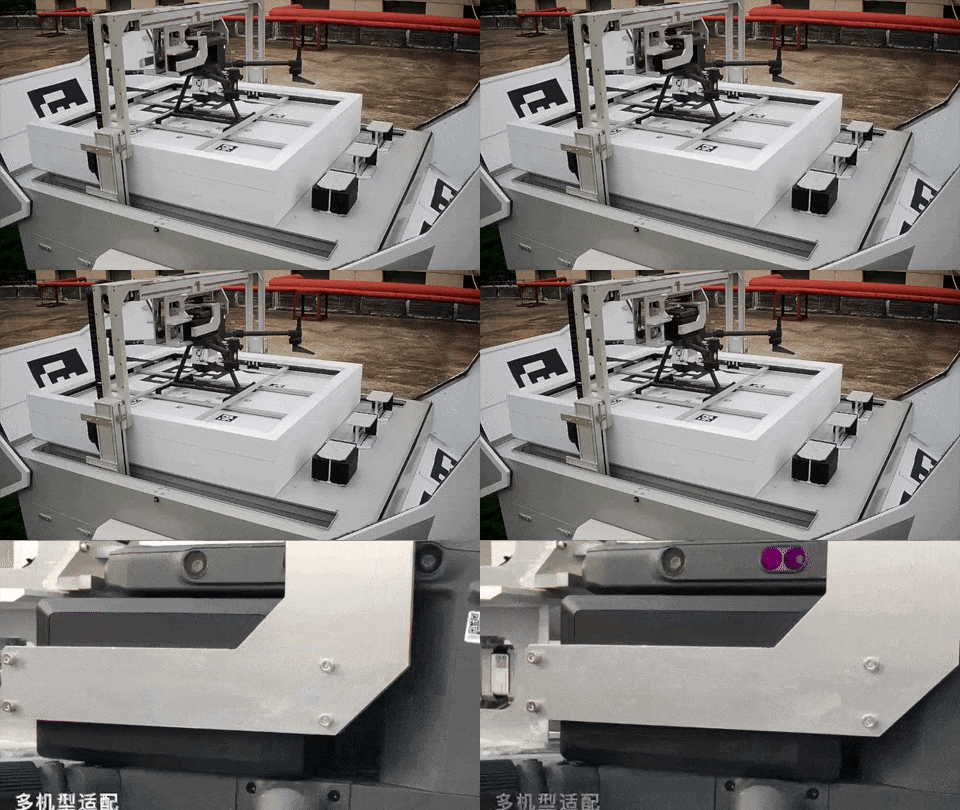
As customers' needs and budgets for refined inspection grew, we adapted to M300 and continued building battery-swap docks.
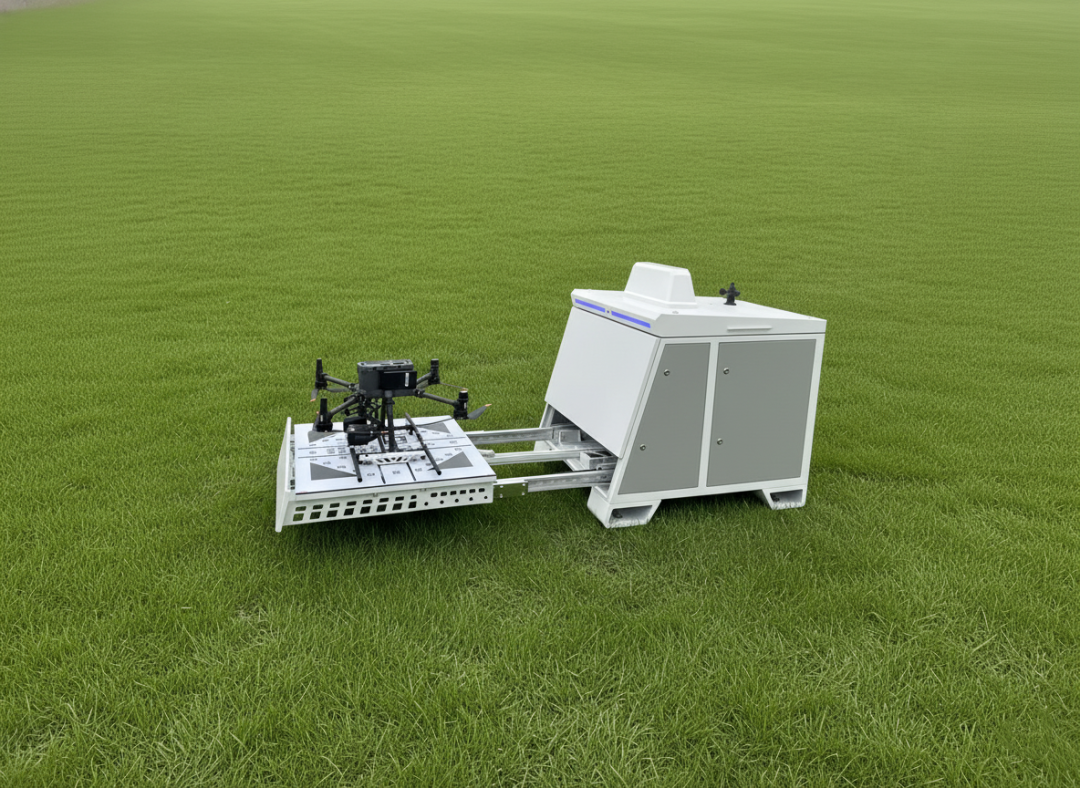
Later, the structure evolved into a drawer style, simpler and better suited for battery swapping.
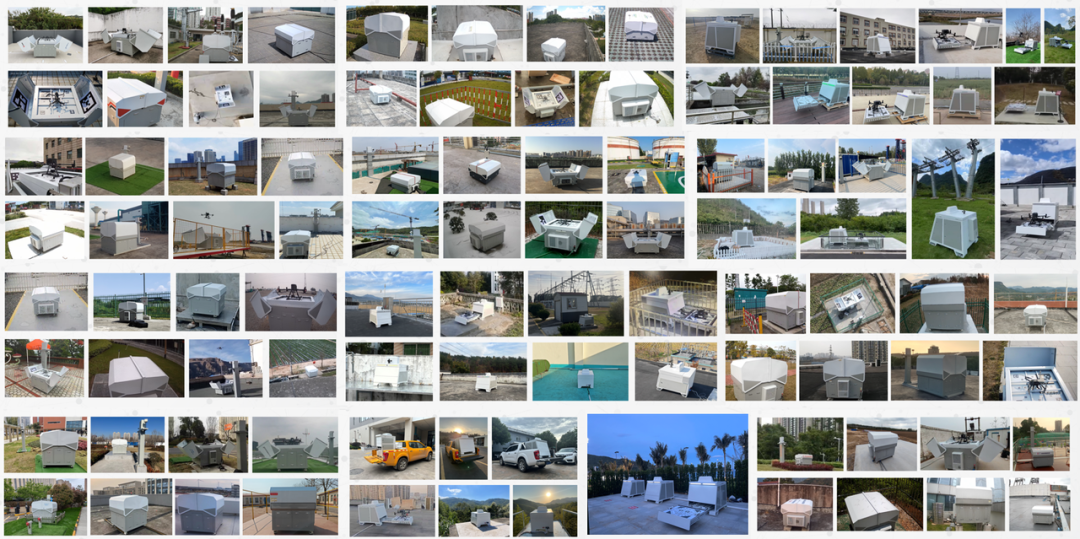
After all these iterations, we had already gone through five generations of products and accumulated more than one thousand deployments across many scenarios:
- from experimental benches where we flew for fun,
- to nuclear power plants, Xinjiang deserts, Hong Kong coastlines, and other harsh environments where the docks work through wind, rain, and snow.
This underground growth history is the foundation of today's new product.
Why hold this launch now?
In the past two years, the low-altitude economy has become hot, and many manufacturers have rushed in. Some people think, "Isn't an automatic dock just a box plus a charger?"
So during these two years, we often received requests that were both frustrating and revealing:
A customer using Manufacturer A's dock said:
It lands during the day, but often fails at night. Can StrawBerry help modify the code to solve night landing?
A customer using Manufacturer B's dock said:
They bought it half a year ago, and hardware problems keep appearing. Can StrawBerry also help fix these hardware problems?
A customer using Manufacturer C's dock said:
After only a few years, the manufacturer no longer maintains the product and there is no after-sales support. Can StrawBerry take over maintenance?
Our feelings are complicated.
On one hand, it is regrettable. Automatic docks already have mature products, but enterprise customers still face information gaps. Some customers have to fall into pits and pay tuition before they learn what a truly stable and reliable product means.
On the other hand, we are also encouraged. Customers really see StrawBerry as a partner that can solve problems, not a supplier that disappears after selling equipment.
This made us more certain of one thing:
This industry needs products that take long-term responsibility,
not one wave of short-term projects after another.
We felt it was time to show what we have been holding back all these years.
How do we view competition?
Some people say:
DJI Dock 3 is already excellent. It is the standard answer for the industry. What else is there for you to do?
Dock 3 is indeed excellent.
But look at the automotive industry. After more than a century of development, new cars are still released every few months, still bringing surprises to consumers.
Why?
Because needs evolve, and scenarios become more segmented.
As the low-altitude economy unfolds, more needs are becoming non-standard:
- stronger zoom plus better infrared;
- fine mapping;
- third-party payloads: high-power loudspeakers, searchlights, methane sensors, multispectral and hyperspectral cameras, gas detection, water-flow detection, and more.
In these specific scenarios, the "standard answer" is not enough. More professional, segmented answers are needed. The opening chapter of low-altitude intelligence has only just begun.
We believe that beyond Dock 3, the industry also needs products that:
- lean toward professional scenarios;
- are willing to chew through hard technical problems;
- are willing to polish details to the limit.
That is exactly where StrawBerry is strong.
The protagonist arrives
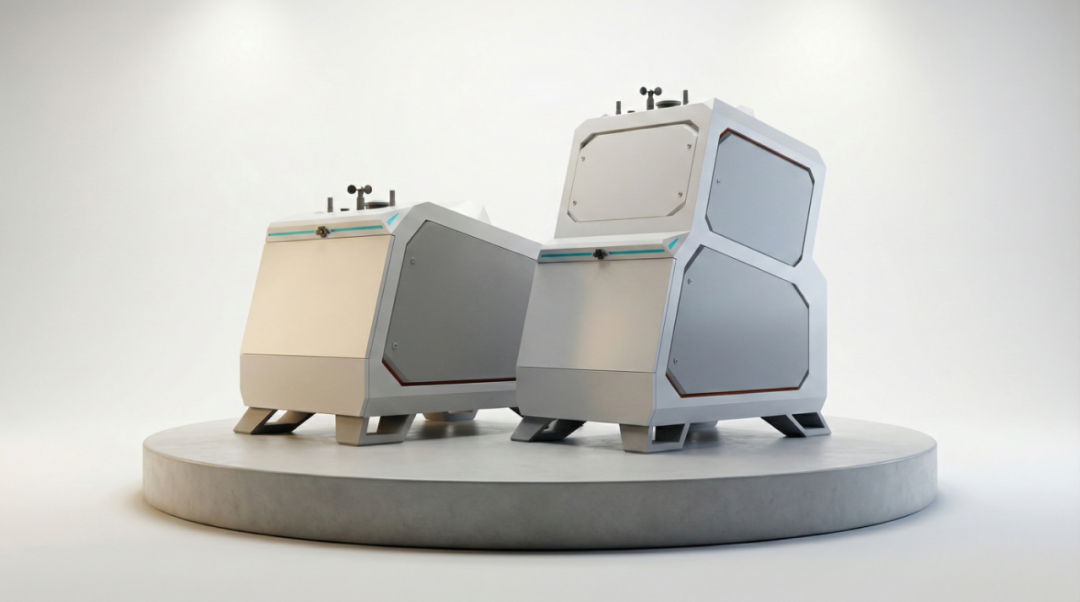
Today's protagonist is our new-generation automatic dock:
SuperDock M400
It comes in two forms:
- Charging edition: adapted for DJI M400 and compatible with M350 / M300.
- Battery-swap edition: deeply designed for M400 and optimized for high-intensity operations.
In one sentence:
Design: the world does not need another industrial box
When people mention design, many think of appearance. For industrial design, we also tried a shortcut: we invited several strong design firms in the industry. Their proposals looked beautiful, but something always felt foreign. The design was disconnected from function and from users. It remained some distance from the product we wanted.
Later we realized:
Design is not only appearance. It requires deep thinking and understanding of the product, and that process cannot be outsourced.
The design is not just what it looks like and feels like.
The design is how it works.
- Steve Jobs
So we did it ourselves, iterating through hundreds of drafts, comparing, overturning, and starting again, carving it into its current form like a sculpture.
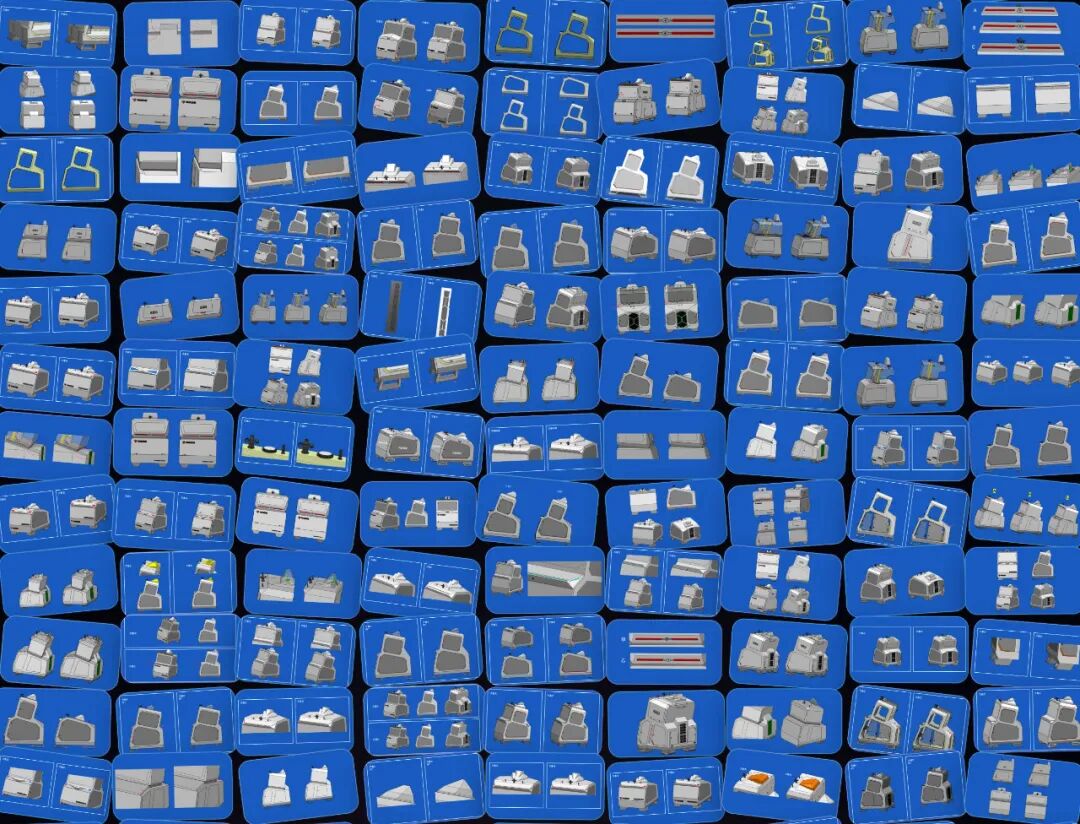
We wanted it to be:
- elegant;
- recognizable;
- truly industrial-grade.
2.png)
If design were ignored completely, it would probably become a cold industrial box. And the world has never lacked industrial boxes.
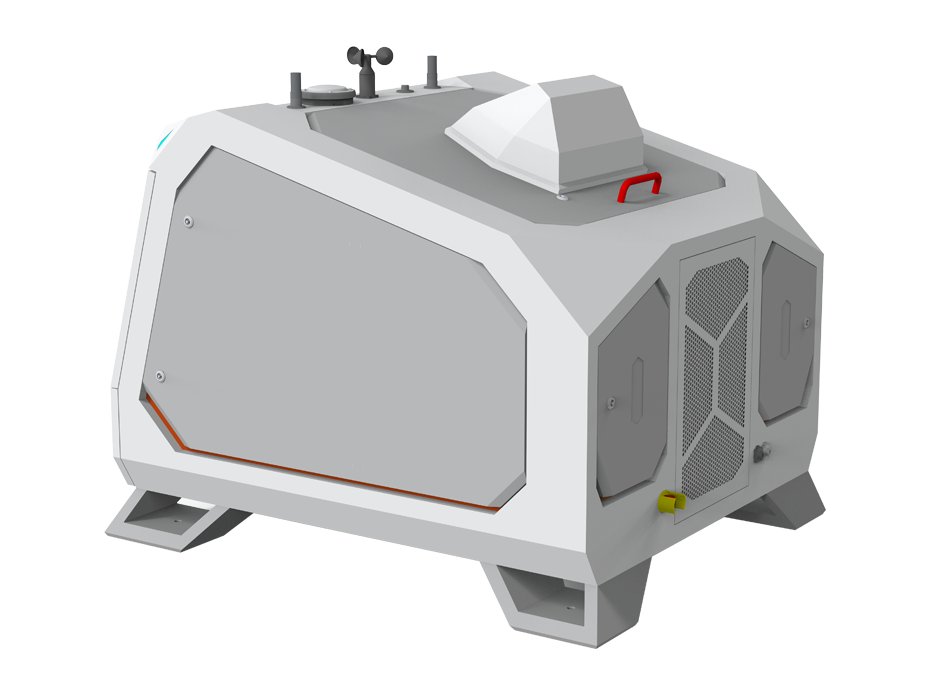
In recent generations, every product we released has been copied or imitated. But we have a firm value:
If a company refuses to spend effort on design and only wants cheap imitation,
it is unlikely to build a truly excellent product,
and even harder to attract excellent people.
So even if our appearance and structure continue to be learned from or copied, we still hope to earn a little respect for original design in this industry.
We also believe the market will eventually reward those who take original design seriously.
Key hardware indicators
- Small enough: even the battery-swap edition only adds a little height. It can pass through ordinary freight elevators without cranes or major construction.
- Full stainless-steel shell: suitable for long-term coastal deployment without fear of sea wind or salt fog.
- Upper doors close during takeoff: effectively block wind and sand from entering the dock, validated in desert and windy coastal projects.
In most projects, an experienced team can complete deployment and achieve first flight within one or two hours after unloading.
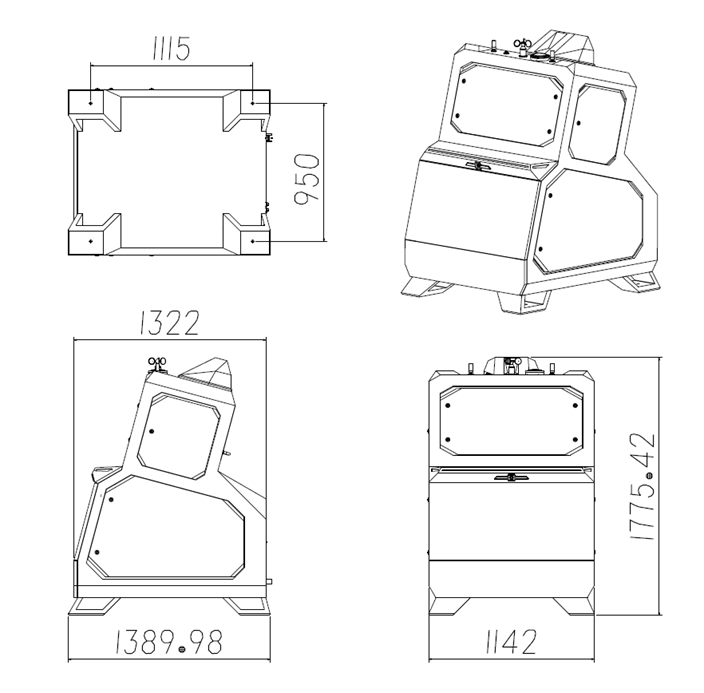
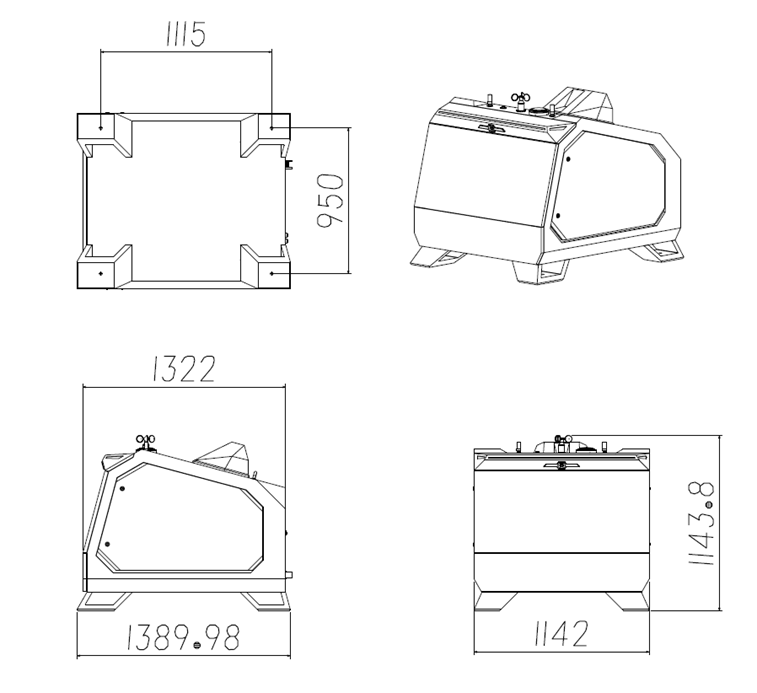
Deployment and vehicle use: true out-of-the-box operation
Over the past few years, we have deployed more than one thousand devices. We follow one principle:
Digest complexity during R&D,
and make the field site as simple as possible.
The real experience in most projects is: power on, connect network, and fly.
Including the battery-swap edition, many projects do not require our engineers onsite. If the local team proceeds smoothly, test missions can run in one afternoon.
Vehicle deployment: small details built for bumps
A vehicle-mounted dock looks cool: mount a dock on the roof, and the drone can fly automatically wherever the vehicle goes.
In real deployment, several practical problems appear:
- vehicle vibration is strong, and gimbal damper balls can burst easily;
- charging contacts wear during vibration, reducing reliability.
For this, we developed a dedicated vehicle module:
- one part protects the gimbal damper balls;
- another part uses a magnetic flexible charging connector that ensures reliable contact while adapting to vehicle displacement and vibration.
We will publish this vehicle module separately later, but vehicle scenarios were considered from the moment SuperDock M400 was designed.
Hardware capability
For many scenarios, Dock 3 is enough. But some tasks have demanding payload requirements:
- strong zoom plus infrared, such as the H30 series;
- fine mapping, such as P1 and L3;
- various third-party payloads: loudspeakers, searchlights, methane sensors, multispectral and hyperspectral cameras, gas detection, water-flow detection, and more.
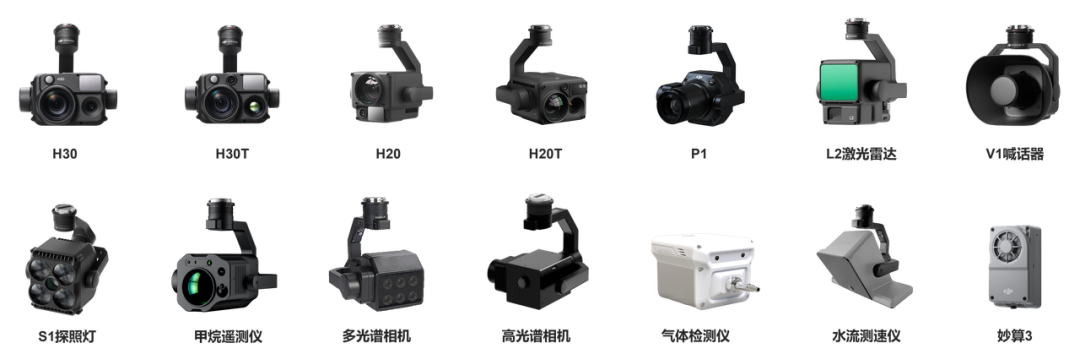
SuperDock M400 is designed for this category of missions.
1. Adaptability
- Charging edition: adapts to M400 and remains compatible with M350 / M300.
- Battery-swap edition: deeply optimized for M400.
This means the M350 / M300 you already have can continue to create value on our dock system.
2. No disassembly, no modification, no warranty loss
No need to disassemble or modify the remote controller, battery, or drone body.
Factory warranty is not affected.
Once removed, it is still a standard DJI drone.
3. Fully rebuilt internal architecture
This time, we almost rebuilt the hardware from the ground up:
- Previously, the dock needed routers, industrial PCs, and many modules.
- Now they are integrated into one PCB, with higher integration and better reliability.
We also developed a matching 4G/5G module. Where there is no Ethernet, users no longer need to buy a separate 5G CPE. Insert our module and connect directly to the cloud.
4. PSDK raw data acquisition
For payloads such as L2 / L3 LiDAR, we built dedicated adaptation to automatically acquire full raw data and upload it to the cloud, which is critical for teams doing fine mapping and post-processing.
Endurance and hop flights with M400
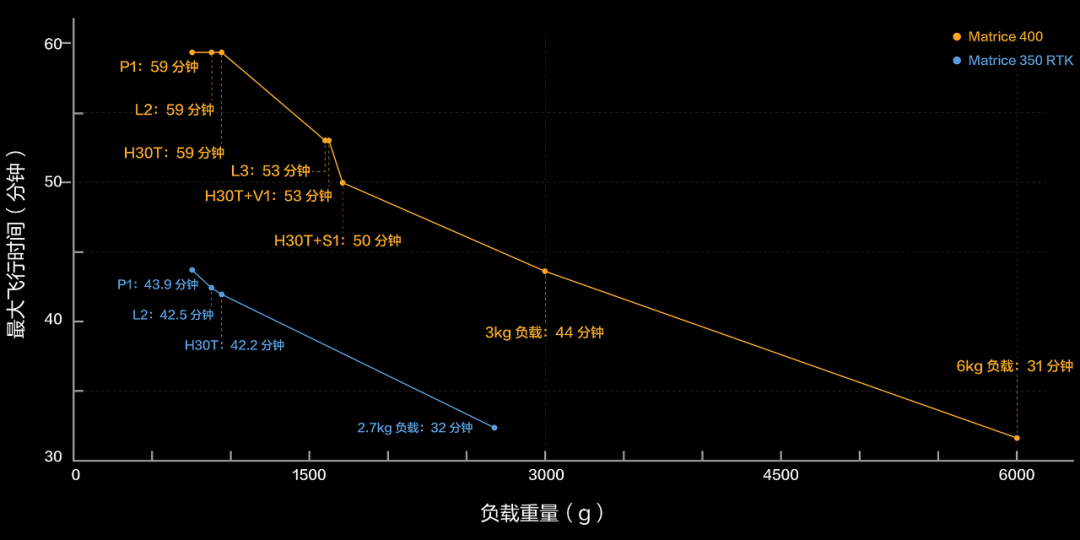
Many friends who have used M350 / M300 automatic docks probably share this feeling:
A nominal 55-minute endurance rarely translates into that much real working time.
- 55 minutes is unloaded.
- With visible-light payload, about 42 minutes remain.
- After takeoff, landing, return, and safety margins, real working time is often under 30 minutes.
- Add third-party payloads and endurance becomes even shorter.
With SuperDock M400, the situation changes significantly:
- M400 with a visible-light payload can reach 59 minutes of endurance.
- After takeoff, landing, return, and safety margins, actual working time can exceed 40 minutes, improving mission duration by at least 30%+.
More importantly, we did something very important on M400:
using the aircraft's built-in fisheye lens for precise landing.
- Use the body FPV for normal operations.
- Switch to the fisheye lens during landing.
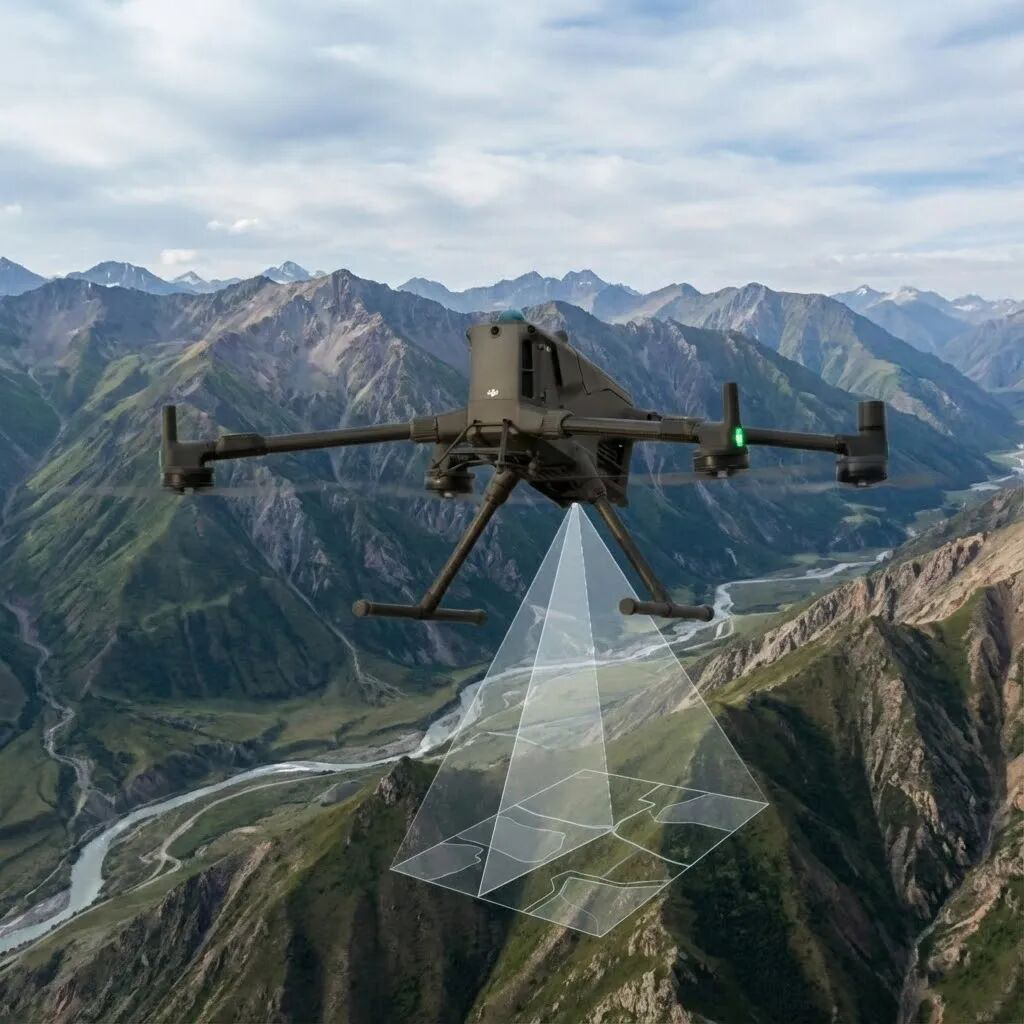
This means the working payload only needs to be the one that truly does the job. No extra visible-light payload is needed for landing:
- payload cost is reduced;
- weight reduction adds more than ten minutes of endurance;
- overall operating efficiency improves by about 60% compared with M350.
It also brings a major hidden benefit: safety redundancy.
In real projects, we have encountered broken gimbal damper balls and camera anomalies. Under the new algorithm, if the main camera fails, the system can automatically switch to fisheye landing, greatly improving robustness.
For M400 dock users doing logistics, this also frees the lower space of the drone for larger cargo boxes without being limited by the main camera position.
Long-distance hop flights: keep expensive payloads working
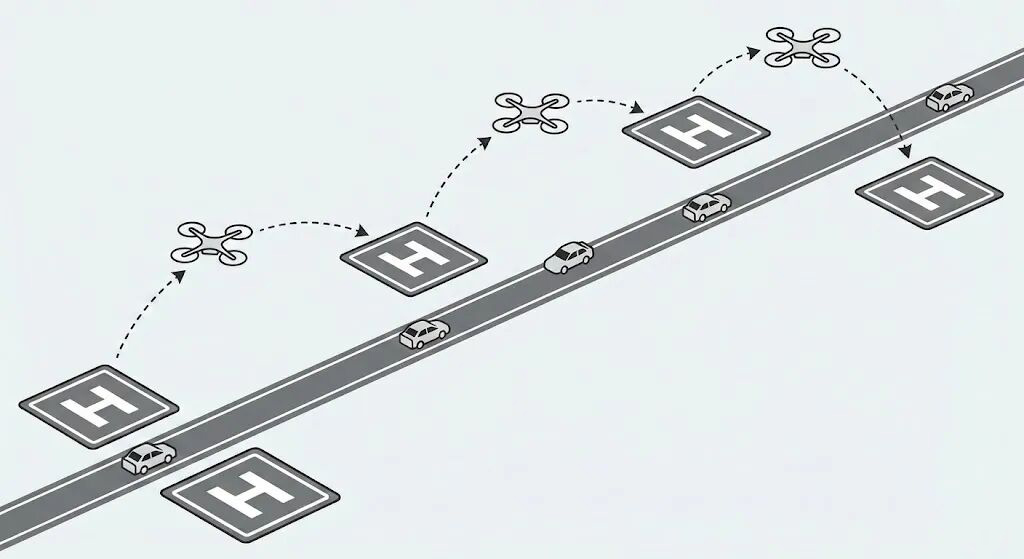
Professional payloads are expensive, and everyone wants them to fly more and farther.
SuperDock M400 supports drones hopping among multiple docks:
- For example, deploy several docks along an expressway.
- The drone can start from the first dock and hop all the way to the last one dozens of kilometers away.
More importantly, this can happen not only during the day, but also at night.
We optimized recognition and safety strategies for night conditions so that night hop flights become a truly usable and deployable capability, not just a slide-deck feature.
Safety: from takeoff and landing to extreme conditions
1. Takeoff: just over 20 seconds, with every safety check intact
From mission dispatch to propeller spin-up, our fastest response can be just over 20 seconds.
The bottleneck here is no longer the dock, but the startup time of the drone and remote controller themselves. Full power-on self-check already takes close to 20 seconds.
We use closed-loop motor control, airborne RTK convergence, multi-stage asynchronous processing, and on-demand module loading to compress preparation time for higher efficiency. This speed does not come from cutting safety checks. Every necessary safety step remains.
2. Vision and AI safety protection
M400 is large, and we still wanted the dock to be as small and easy to deploy as possible, so we designed front, rear, left, and right propeller-folding mechanisms for the aircraft.
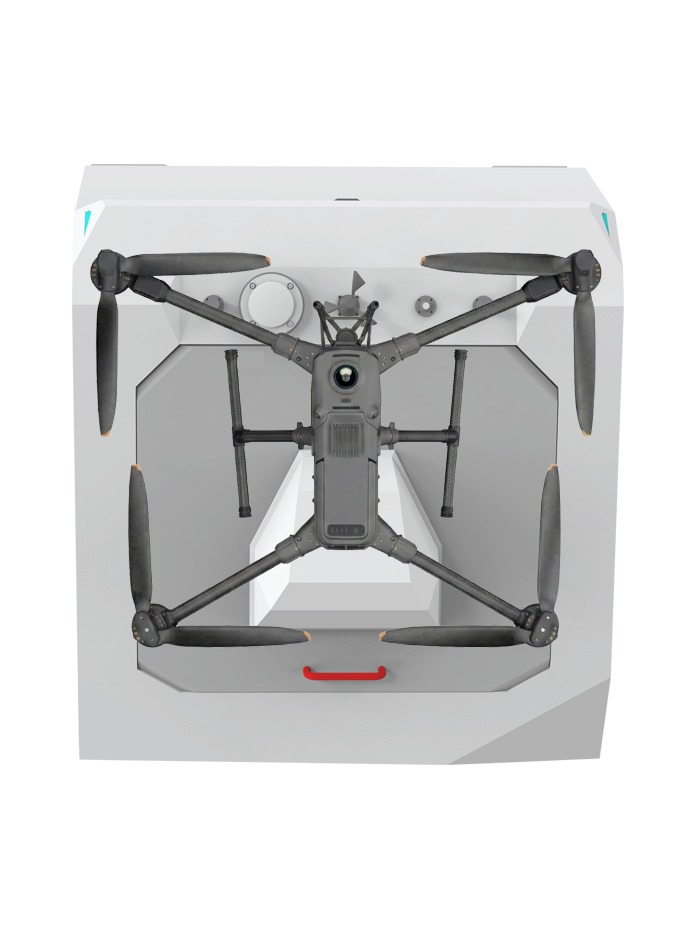
At takeoff, propellers swing out from the folded state. If someone is nearby, it can be dangerous.
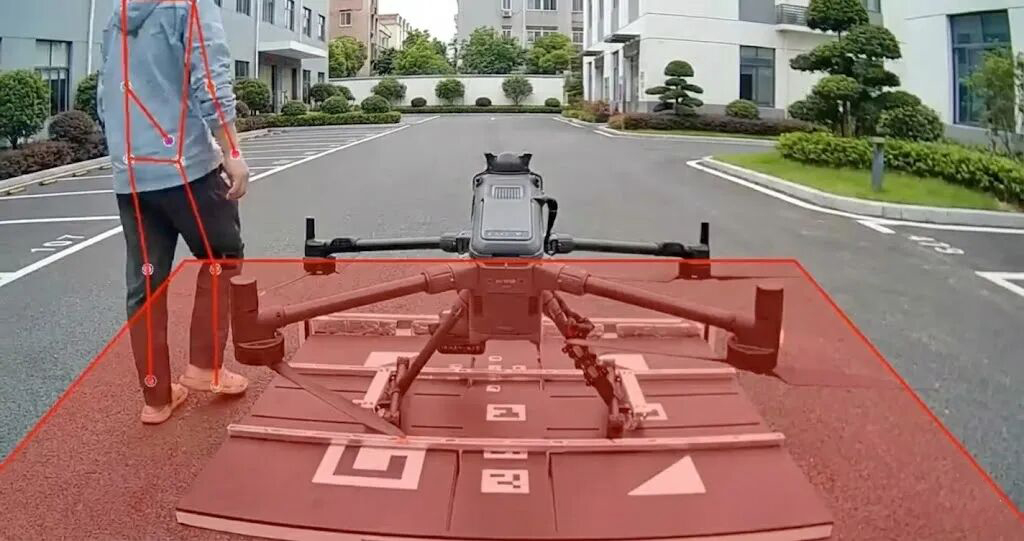
So we added AI safety detection to SuperDock M400:
The system allows takeoff only after confirming the surrounding environment is safe.
3. Extreme landing scenarios: textbook-level hard mode
In the past, we used QR-like visual guidance patterns, which worked in most scenarios. But in real projects, we encountered combinations like:
- long-distance hop flights plus obvious altitude differences;
- pure darkness, fog, and light rain;
- extremely unstable signal with occasional RTK loss;
- the dock installed on a tower, making ultrasonic height measurement inaccurate.
In this hard mode, landing accurately on the dock every time is very difficult.
We solved it with two changes:
- an adjustable-brightness light-guide plate as the guidance marker;
- a neural network model trained specifically for these conditions.
The result: even under this extreme combination, the drone can still land stably and safely on the dock.
The efficiency trio: takeoff, transmission, and replenishment
In this generation, we focused on pushing three things to the limit:
- takeoff efficiency
- transmission efficiency
- energy replenishment efficiency
1. Takeoff efficiency
As mentioned above, mission dispatch to takeoff can complete in just over 20 seconds.
2. Transmission efficiency: download while flying, upload while landing
We rebuilt the data transmission mechanism. When network bandwidth is sufficient:
All mission data may already be in the cloud before the drone has finished landing.
For L2 / L3 LiDAR and similar payloads, we can automatically acquire raw data and transmit it efficiently.
3. Replenishment efficiency: both charging and battery swapping
Charging dock:
- With proper thermal and power control, it can charge a battery from 20% to 90% within 30 minutes.
Battery-swap dock:
- Battery swap can complete in as fast as 100 seconds.
- The dock holds 4 batteries, the most space-efficient solution after repeated design evaluation.
We built an intelligent charging scheduling algorithm. In typical scenarios, only 3kW of power is enough to support continuous dock operation.
What does that mean?
In many remote regions, work sites, and townships, a single 220V power line can run a professional automatic dock system. Power infrastructure is no longer the blocker.
Software and openness
We do not want SuperDock M400 to be a closed black box. We want it to be a platform friendly to developers and integrators.
1. Cloud API compatibility
We are compatible with DJI's Cloud API. If you have already integrated DJI docks, migration to our equipment usually takes about half a day.
We also plan to open source a complete usable cloud control system as a real out-of-the-box reference implementation.
2. New software capabilities we added
Beyond Cloud API compatibility, we built many capabilities that DJI does not provide but customers repeatedly requested in projects:
- 4G automatic authentication: no monthly SMS handling by phone; the system renews automatically.
- Reserved return-home power: reduces risk when flying out with tailwind and returning against headwind.
- Battery over-discharge prevention: if cells are not damaged, the system automatically attempts recovery.
- Custom flight areas / no-landing areas
- M350 breakpoint resume
- Auxiliary video streaming
- GB28181 streaming: related code and libraries are already open sourced.
- Lightweight AI recognition interface (planned)
Third-party payload partnerships
We have already adapted quite a few third-party payloads.
Our goal is simple:
Make "drone + automatic dock + third-party payload" a platform-level capability, not a pile of temporary project assemblies.
Business model
We build products. We do not take customers away from partners.
We are not good at large-scale end-customer sales, and we do not want to become the company that collides with partners on every opportunity. So our stance is very clear:
We hope more partners stand on the front line: communicating solutions, bidding, deploying, and operating. We focus all our energy on one thing:
Make the product more stable, easier to use, and more powerful.
Long-term commitment to customers
StrawBerry could not have reached today without the early partners who walked through difficulties with us. So here is a public long-term commitment:
- For customers using M350 / M3 / M4 docks released in 2023 or later, we will provide free software upgrades.
- For customers using M300 docks released in 2021, we will provide hardware upgrade kits at cost.
- For earlier Mavic 2 models and open-source drone customers, each device will receive a coupon for purchasing a new dock.
Some docks may develop problems and stop working within a year.
Few manufacturers are willing to include equipment released five years ago in an update plan.
StrawBerry still chooses to do it, because in our eyes, these docks are real infrastructure for the low-altitude world. They are not cheap, so they deserve a longer service life and should keep adapting to customers' new requirements throughout their lifecycle.
Service and customization
- Free pre-purchase testing
- Full-process technical support
- Long-term cooperation assurance
- Brand and exterior customization
Two final things
First: we are hiring
We hope to find:
- excellent structural engineers;
- steady and reliable project managers.
Second: a small wish
One day in the future, when you look up and see groups of drones quietly and automatically inspecting cities, forests, and coastlines, we hope a small portion of them are taking off from StrawBerry automatic docks.
On the road toward the low-altitude economy, there is an extremely stable, quietly hardworking small team leaving a small but serious mark.
The busy but orderly low-altitude world from science fiction will come.
This is StrawBerry Innovation.
This is our SuperDock M400 automatic dock.